

May 19, 2026 · 6 min read
THE MATERIAL DIFFERENCE: WHY 90S SURFWEAR FEELS BETTER
The cotton hits heavier. The fleece doesn't pill. The colors fade the right way. People who handle a lot of vintage surfwear say the same things, and it's not nostalgia talking. There are real, specific reasons why the materials used in 90s Quiksilver, Billabong, and O'Neill pieces feel and perform differently than anything made today — and it comes down to cotton weight, fleece construction, and how dyes were applied.
WHY 90S COTTON HITS DIFFERENT
The cotton used in 90s surf tees and flannels was heavier. Not slightly heavier — noticeably heavier. A standard tee from that era typically ran 6–7 oz per square yard. Modern tees, even from premium brands, often come in at 4.5–5.5 oz. That difference in weight changes everything: how the fabric drapes, how it feels against skin, how it holds shape after washing.
The weave mattered too. 90s cotton was predominantly ring-spun and often combed — a process that removes short fibers and leaves a smoother, stronger yarn. Modern mass-market cotton skips this step or uses open-end spinning, which is faster and cheaper but produces a rougher, weaker fabric that pills and degrades faster.
Quiksilver and Billabong were sourcing from mills that were still prioritizing this kind of quality. The result was a t-shirt that felt substantial, held its shape through hundreds of washes, and softened over time in a way that felt earned rather than manufactured.
THE SCIENCE BEHIND VINTAGE FLEECE
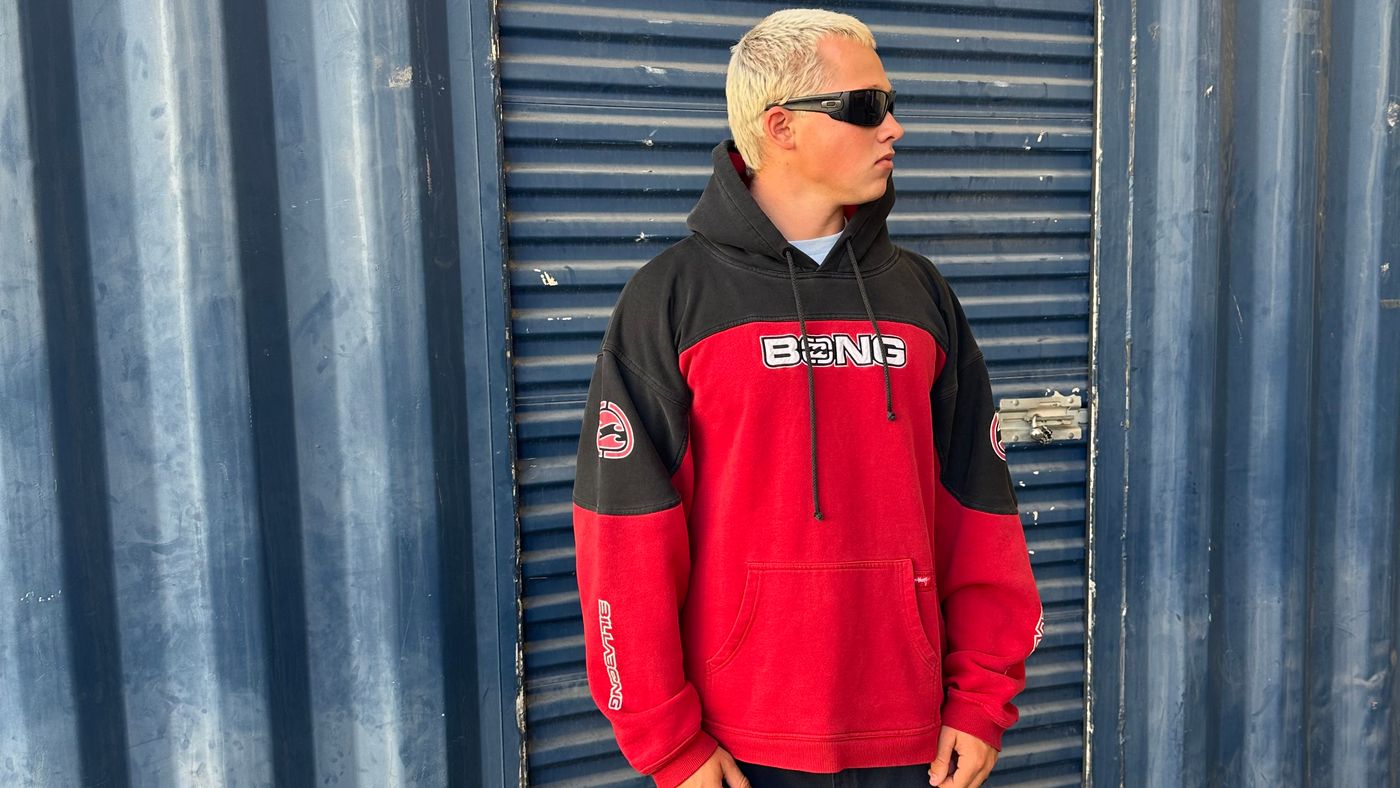
Vintage hoodies — especially Billabong's from the late 90s and early 2000s — don't pill, sag, or lose shape the way modern hoodies do. The reason is in the fleece construction.
The fleece used in that era was typically a mid-to-heavy weight cotton-polyester loop-back terry or French terry. The loop structure on the inside of the fabric traps air and holds loft over time. The ratio mattered: something close to 80% cotton, 20% polyester gave the fabric warmth, structure, and enough synthetic content to resist stretching without feeling stiff.
Modern budget fleece often reverses that ratio or uses cheaper polyester blends that flatten out quickly. The loops collapse. The fabric pills as short fibers work their way to the surface. The cuffs lose tension. A vintage Billabong hoodie avoids all of this because the raw material was simply better to begin with.
The construction details compounded the effect. Tighter knit density meant less surface area for fibers to escape and form pills. Proper ribbing on cuffs and hem used a separate, higher-tension knit that held elasticity over years of wear. These weren't expensive details — they were just done right.
THE DYE PROCESS IN THE 90S
One of the most visible differences between vintage and modern surfwear is how the colors age. Vintage pieces fade beautifully — evenly, gradually, in a way that looks intentional. Modern pieces tend to either hold color artificially (due to synthetic dyes locked into synthetic fibers) or fade badly and unevenly.
The difference comes from dye chemistry. Vintage cotton surfwear was predominantly dyed with reactive dyes applied to natural fibers. Reactive dyes form a chemical bond with the cotton molecule itself. As the fabric ages and washes, the dye releases slowly and evenly — producing that characteristic faded look that actually improves the piece's appearance.
Modern pieces using synthetic blends can't accept reactive dyes the same way. They use disperse or pigment dyes that sit on the surface of the fiber rather than bonding with it. These either stay artificially bright or crack and blotch unevenly when they eventually break down.
The result is that a vintage Quiksilver tee from 1997 that's been washed a hundred times looks better than it did new. A modern equivalent after the same treatment looks worn out.
THE COMPARISON
| Category | 90s Vintage | Modern Production |
|---|---|---|
| Cotton weight | 6–7 oz/sq yd | 4.5–5.5 oz/sq yd |
| Spinning method | Ring-spun, combed | Open-end spun |
| Fleece construction | Loop-back terry, 80/20 cotton-poly | Cheaper poly blends, low density |
| Dye type | Reactive (bonds to fiber) | Pigment/disperse (surface level) |
| How it ages | Fades evenly, softens over time | Cracks, pills, loses shape |
| Embroidery | Dense thread, flush finish | Thinner thread, less detail |
WHAT THIS MEANS WHEN YOU'RE BUYING
Understanding the material difference changes how you evaluate vintage pieces. Weight is your first signal — pick it up and feel it. A heavy tee is a good sign. Check the fleece interior on hoodies — tight loops, dense knit, ribbing that still holds tension. Look at how faded pieces have aged — even, gradual color loss is a sign of quality reactive dyes doing their job over time.
The brands that got this right consistently — Quiksilver, Billabong, O'Neill — were building to a standard that the market no longer demands. Finding their pieces from that era isn't just buying old clothes. It's buying into a material quality that genuinely doesn't exist in new production anymore.